
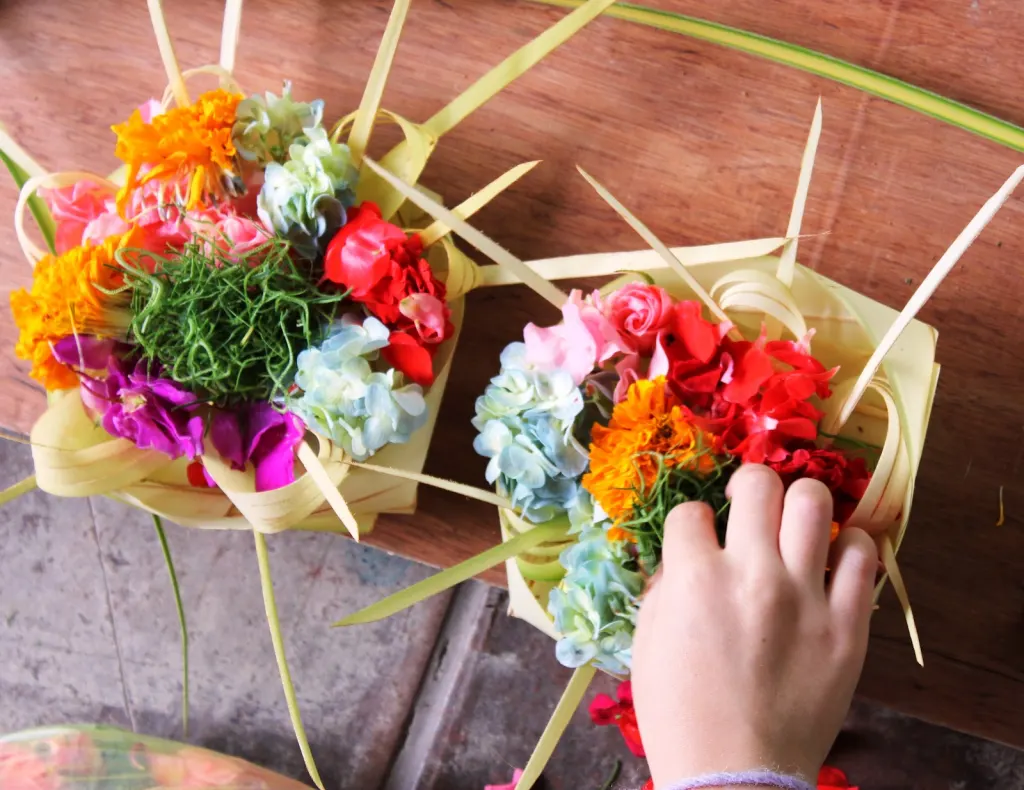
Walk through any Balinese village in the morning and you will see small square trays made of young coconut leaf, filled with colourful flowers, a pinch of rice and sometimes a sweet or a cigarette. These are canang sari, the daily offerings Balinese Hindus make to give thanks.
What the offering means
The name comes from the words for “small offering” and “essence”. The flowers are arranged by colour, each facing a direction linked to a Hindu deity, and the offering is completed with incense and a short prayer. Making them is part of everyday life – many families prepare dozens every day.
Where you will see them
- On doorsteps, shop entrances and the ground in front of houses
- At family temples and village shrines
- On car dashboards – including in our cars
- At the entrance of every temple we visit on tour
How to show respect
Try not to step on offerings on the pavement, but don’t worry if it happens by accident – once the prayer is said, the offering has done its work. Never pick one up or move it. If you are curious, ask your driver: most of us are happy to explain, and some villages even welcome visitors to try making one.